
NEWS & BLOG · October 13, 2026 · By Zhithera Studio
Why do businesses scent their spaces? Because a consistent scent is part of what people remember: the hotel lobby someone reaches after hours of travel, the conference room where a deal closes, the car handed back after a service. Property managers, office managers and dealership owners are who this guide is for. It explains how waterless diffusion works in hotels, offices and the auto trade, which device suits each area, how to budget oil from reference figures and estimates, which documents are available, and how to open a wholesale account with Zhithera.
Water-based diffusers mix oil into a tank of water, have to be topped up and washed daily, and leave mineral deposits wherever the water is hard. Multiply that across a whole property and the upkeep turns into a staffing cost. Zhithera's Advanced Micro-Mesh Atomization skips the water: a fine vibrating mesh turns neat oil into a dry mist without heat. Nothing needs emptying, and what reaches the room is the oil itself, not a watered-down version.
The Zhithera D1 and the D1 mini share one cartridge format: sealed, refillable, 6.5 ml. A scent change is a cartridge swap, not a reservoir clean, so scents don't bleed into each other from one zone or season to the next.
Hotels scent at two scales: public areas that greet every arrival, and private rooms that call for a lighter touch.
Pick the D1 for large spaces. Built in 6-series aircraft aluminum, it offers low and medium (both intermittent) and high (continuous). Its measured maximum, on high continuous with fragrance oil, was about 380 square meters. That number is the top of the range, not what every space will see: ceiling height, ventilation, partitions and open doors all affect real coverage. Tall ceilings and busy entrances work against you, so give the diffuser a central spot, well back from doors and air vents.
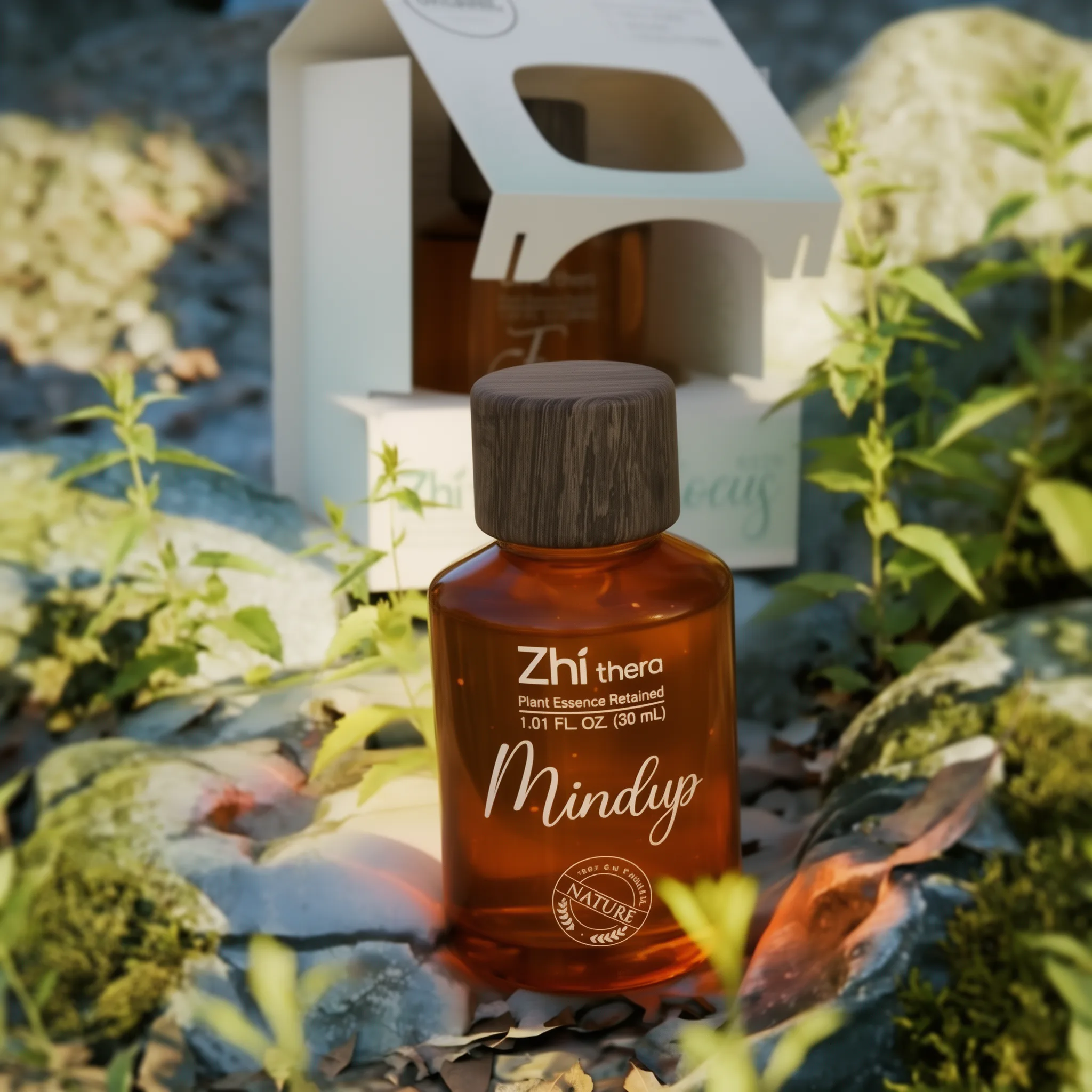
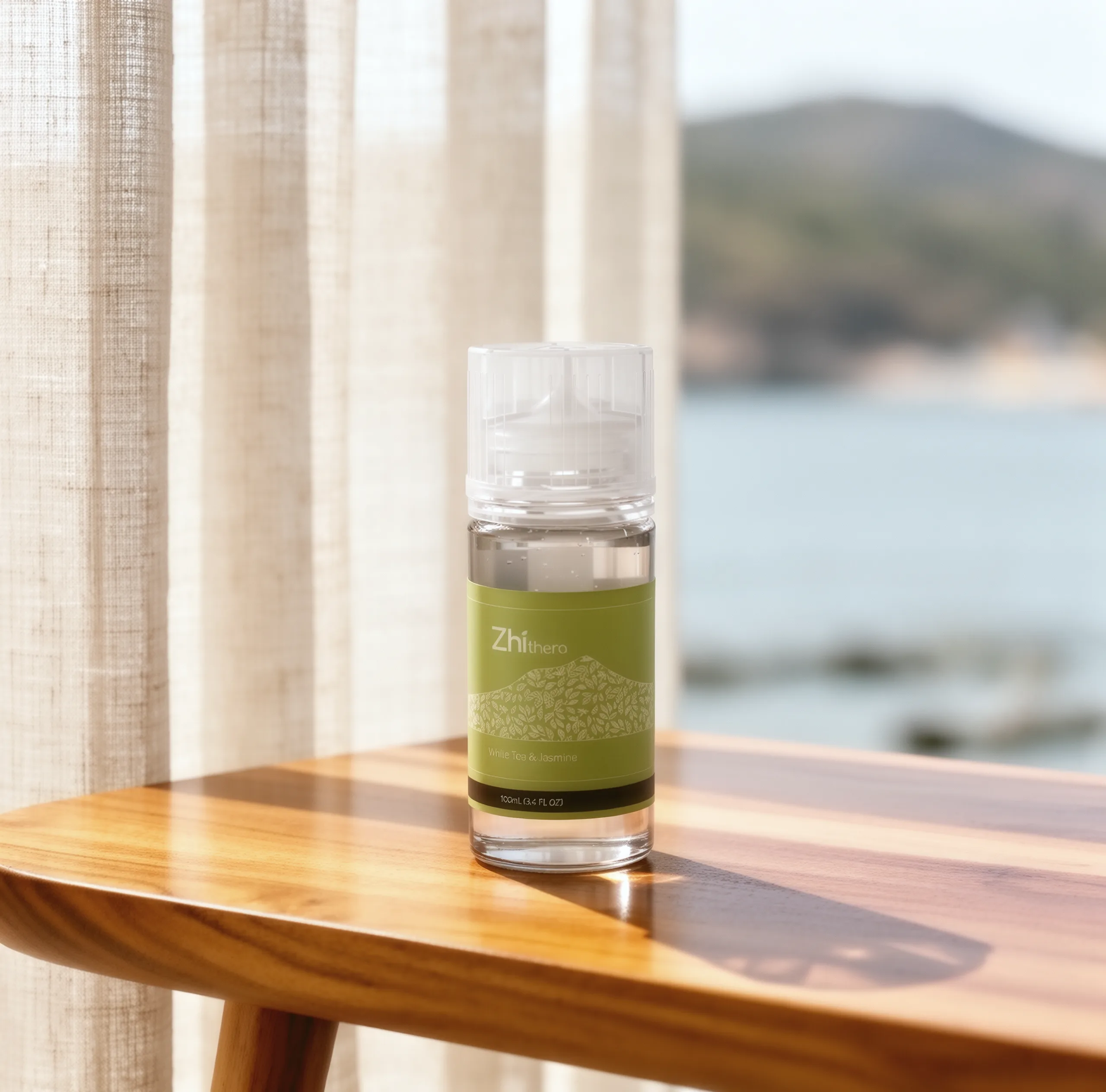
Fragrance oil is the line for these areas. Zhithera's designer fragrance oils, custom-formulated for Zhithera and sold in 100 ml bottles, last longer than pure botanical oils and stay more consistent batch to batch. For a hotel, that consistency is the point: guests who come back in October expect the lobby to smell the way it did in March. Pick Eastern Elegant House if you want an executive-hotel character: it opens on bergamot and fig leaf, moves through neroli, white magnolia and jasmine, and dries down to vetiver, cedar and sandalwood.
Small rooms need much less output. A 10–15 m² room calls for the D1 on low to medium; a D1 mini also works at close range. At about 35 g and quiet in operation, the D1 mini stays unobtrusive after dark. For these close settings, pick pure botanical essential oils: with nothing added to fix them, they disperse fast and fade fast, so a small room never feels heavy.
In an office, scent should register when people arrive, then slip into the background. Most offices work well with three zones.
Thanks to its 3500 mAh power base, which also works as an emergency phone charger, the D1 moves to a meeting room without any cabling. Charging is over Type-C on both models, and neither has to stop diffusing while it charges. While diffusing, the D1 draws about 1.5 W.
Pick the D1 mini as the smart car diffuser of the range. It has a magnetic in-car mount and a cartridge that swaps magnetically in about a second, and its in-car mode senses motion: vibration wakes it, it mists for 5 seconds and pauses for 2 minutes, and after 10 still minutes it goes to sleep, waking again with the next bump in the road. One charge covers roughly 5 to 7 days of normal daily driving in this mode; drive time and wake frequency change the figure.
In a car, mount it well away from where the air conditioning draws air in, and from the sensor that monitors cabin air. Mist droplets register as particles on an optical PM2.5 sensor, so the reading may climb while the diffuser runs; the low or in-car setting plus a little fresh-air ventilation helps keep it down. The sensor measures how many particles there are, not what they are.
Commercial buyers need figures to plan oil and staff time. In the table, high continuous is the brand's measured benchmark for the D1; low and medium are estimates scaled by each mode's duty cycle.
| Setting | Oil per hour | Runtime per 6.5 ml cartridge | Good for |
|---|---|---|---|
| Low (intermittent) | 0.14 ml (est.) | about 46.5 hours | Everyday background scent in smaller rooms |
| Medium | 0.87 ml (est.) | about 7.5 hours | Reception through business hours |
| High (continuous) | 4.3 ml | about 1.5 hours | Filling a large space fast |
Worked example: a reception D1 on medium for 10 hours a day goes through about 8.7 ml of oil daily, roughly 260 ml over a 30-day month, close to 2.5 bottles of the 100 ml size. With about 7.5 hours per cartridge on medium, if it opens the day full, plan on topping it up once before closing; check the level at opening and again later. Switch the same unit to low for 10 hours a day and it uses about 42 ml a month, needing a refill roughly once every four or five business days. High continuous is a pre-opening tool for filling the space, not an all-day setting.
Look at each cartridge after about five refills, and swap it out if its mist has weakened, so output stays consistent. Cartridges, mesh included, are consumables, so budget for them as well as for oil.
Both lines run in the same device, so you can choose zone by zone. Pick pure botanical essential oils for small, close spaces such as a spa suite, a car, a private office or a bedroom. For lobbies, showrooms and reception areas, where scent needs to last, pick designer fragrance oils. Each line is thin enough for mesh atomization, but the mesh still needs looking after, and clogs can still happen. Most clogs trace back to oils cut with a carrier like jojoba or grapeseed, and those don't belong in these diffusers. The details are in essential oils vs fragrance oils.
Procurement teams usually want paperwork before a first order. Ask for what fits your model, formula and market: test reports for the device, compliance documents, documents for shipping the battery, and for the oils, safety data sheets plus IFRA information. Each document covers a specific product and purpose. Where FDA facility registration applies, it isn't product approval. Visit our certifications and compliance page, or list the documents you need in your inquiry.
Ratings: the D1 works at 5 to 40 °C and 10 to 80% relative humidity, at altitudes up to 2000 m; the D1 mini at −10 to 80 °C and 10 to 80% relative humidity. IPX1 is the rating for both, which means a shelf or counter, never a shower or a spot next to standing water. The warranty runs 12 months on diffuser bodies and the D1 charging dock, for faults not caused by the user.
Both oil lines are aromatic products, meant only for diffusion: never on skin, never swallowed. Children and pets shouldn't be able to reach the devices or the oils, and rooms need ventilation. Zhithera products are not medical devices, and they are not intended to diagnose, treat, cure or prevent any disease.
Yes. Advanced Micro-Mesh Atomization turns undiluted oil into a dry mist without water or heat, so there's no tank to empty. Water-based units dilute the oil, need refilling and cleaning daily, and leave mineral deposits in hard-water areas.
It depends on the setting. On medium, one cartridge covers about 7.5 hours, so a unit running 10 hours from a full start gets topped up once during the day. On low for 10 hours daily, it uses around 42 ml a month (an estimate) and wants a refill every four or five business days.
Send us the devices, oils and sales market for your order and ask which test reports, compliance papers, SDS and IFRA information apply.
Yes, so the oil can change from zone to zone. Botanical essential oils suit small, close spaces; designer fragrance oils suit big spaces where scent should hold. Each line is thin enough for mesh atomization.
Wholesale accounts see wholesale prices at checkout, and each order can carry your own PO number; it shows up on both the invoice and the order confirmation, which makes reconciliation simple. Orders leave from either Hong Kong or the US.
Tell us where and how you sell, how many sites you scent, and if you're after a custom scent or private label; we'll suggest a setup to match. Send a wholesale inquiry or ask for a sample.
Zhithera – A Professional Aromatherapy Delivery System Zhithera designs waterless, heat-free diffusers that atomize pure botanical essential oils and designer fragrance oils into a micron-fine mist using Advanced Micro-Mesh Atomization. Built for consistent, controllable aromatic states — focus, relaxation, recovery and restful ambiance — our range serves homes, offices, cars, spas, hotels and retail spaces worldwide. Every batch is traceable and supported by recognized third-party testing, with dependable wholesale and distribution support for partners around the globe.
Aromatherapy & Essential Oil Notice
Zhithera essential oils and fragrance oils are non-medical aromatic products intended for diffusion only. They are not intended to diagnose, treat, cure or prevent any disease or condition, and are not medical devices. Do not apply oils to skin or ingest them, and keep oils and devices out of reach of children and pets. Ensure good ventilation, and if you are pregnant, nursing or have a medical condition, please consult a qualified professional before use. Scent is experienced differently by everyone; discontinue use if any irritation occurs. We make no therapeutic, disinfecting or insect-repellent claims for any Zhithera product.